The micro hairline technique is a specialised artistic method used in both scalp micropigmentation (SMP) and hair transplantation to recreate a natural-looking hairline by introducing deliberate irregularities and gradual density transitions. Known in the industry as micro hairline design, it replicates the subtle variations in hair placement, angle, and spacing that occur naturally in real hair growth. For anyone dealing with male pattern baldness, alopecia, or a receding hairline, understanding this technique is the first step toward knowing whether SMP or a surgical solution will genuinely restore your appearance or simply look like a procedure.
How does the micro hairline technique work in scalp micropigmentation?
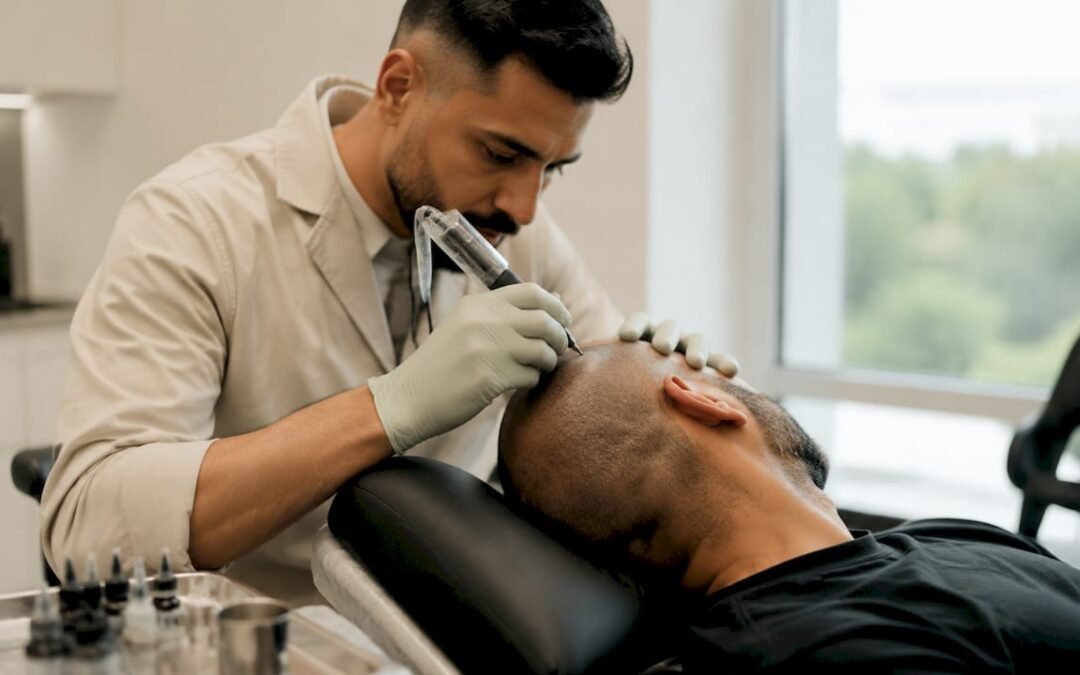
The micro hairline technique in SMP works by placing thousands of individual pigment dots across the scalp in patterns that mimic real hair follicles, with deliberate variation in spacing, size, and density. The goal is never uniformity. SMP artists create hairlines by designing uneven edges, random pigment spacing, and fading density to replicate the way natural hair actually grows.
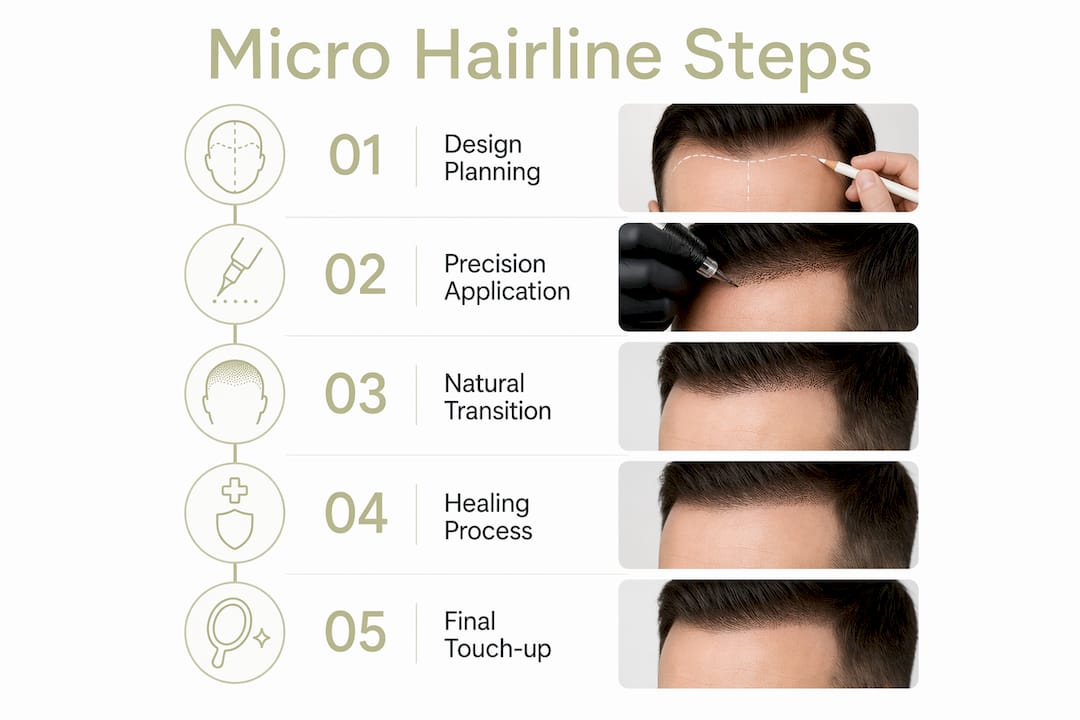
The most critical element is the transition zone, which typically spans 1 to 2 cm from the very front of the hairline backward. In this zone, pigment dots are placed sparsely at the front edge and gradually increase in density as you move further back. This gradual fade is what separates a convincing result from one that looks painted on. A poorly designed hairline is the single biggest giveaway of an SMP procedure, and it almost always comes down to a failure in this transition zone.
Several principles govern how pigment is placed within the technique:
- Micro-irregularities: Slight zig-zag patterns and random spacing at the hairline edge prevent the eye from detecting a straight, artificial border.
- Density variation: Dots are sparse at the very front and progressively denser toward the mid-scalp, creating depth and dimension.
- Angle and direction: Pigment deposits follow the natural direction of hair growth for the individual client, not a generic template.
- Soft edges: SMP hairline edges must avoid hard borders at all costs, since a crisp line reads as artificial to even an untrained eye.
- Skin tone matching: Pigment colour is blended to match the client’s individual skin tone and existing hair colour, not applied from a standard palette.
Pro Tip: Ask your SMP practitioner to show you the hairline design on paper or digitally before any pigment touches your scalp. A practitioner who cannot articulate their transition zone strategy is one to avoid.
The single-dot pigment deposits used in quality SMP require significant skill to execute consistently. Each dot must be placed with controlled depth and pressure to avoid blowouts, where pigment spreads beneath the skin and creates blurry, unnatural marks. This is why practitioner experience is not a bonus consideration. It is the primary one.
How is the micro hairline technique applied in hair transplantation?
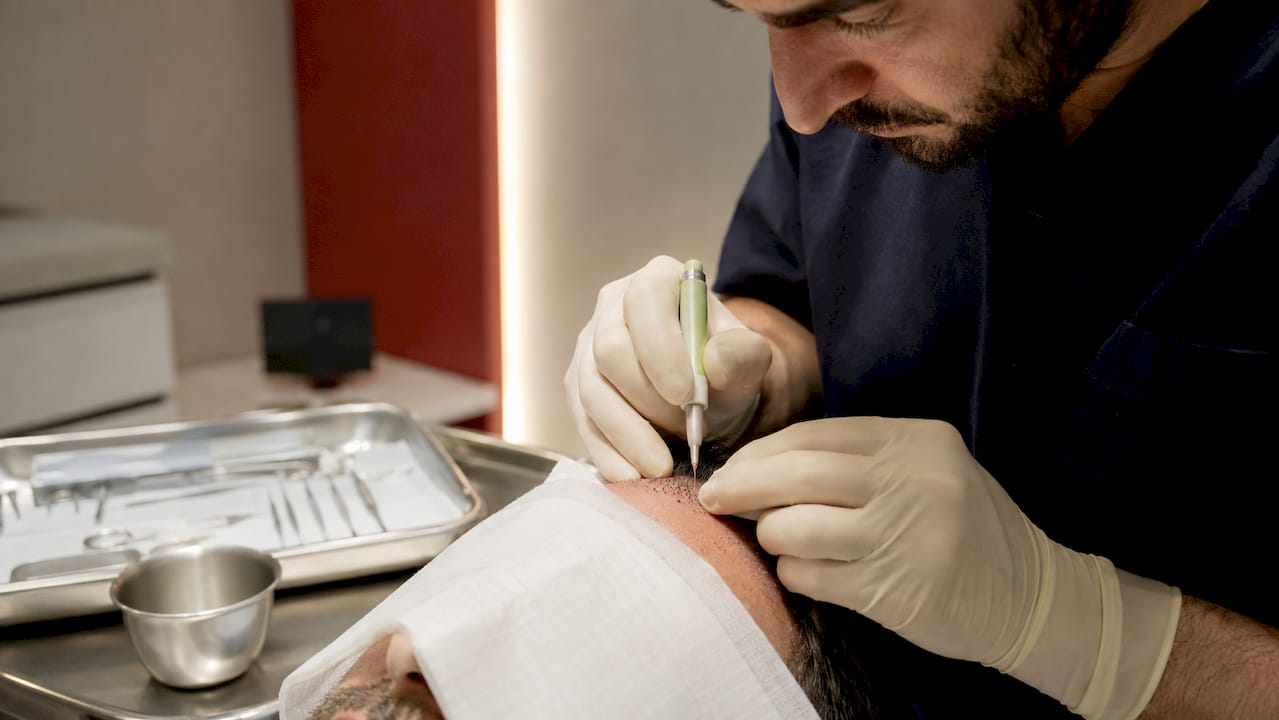
In surgical hair restoration, the micro hairline technique translates into the precise placement of individual hair grafts rather than pigment dots, but the artistic principles are identical. The transition zone still governs everything, and the same logic of gradual density and deliberate irregularity applies.
The process follows a structured sequence:
- Single-hair grafts at the front row: The transition zone requires single-hair grafts exclusively placed at shallow angles of 10 to 15 degrees. These create a feathered, transparent edge that blends naturally with the forehead skin.
- Correct growth angle: Natural hair grows at shallow angles of 15 to 20 degrees at the front hairline. Grafts placed at angles greater than 45 degrees produce an unnatural, upright appearance that no amount of styling can correct.
- Planned irregularity: The surgeon deliberately designs a zig-zag or slightly asymmetric hairline rather than a straight or perfectly curved one. This asymmetry is intentional and critical.
- Layered density behind the transition zone: Two-hair and three-hair grafts are placed progressively further back, building density in a way that mirrors how natural hair grows in clusters behind the hairline.
- Age-appropriate positioning: The hairline is placed at a height that suits the client’s age and facial structure, not as low as possible. A hairline positioned too low will look unnatural within a decade as the face continues to age.
Pro Tip: If a surgeon proposes a perfectly symmetrical hairline without discussing micro-irregularities, treat that as a warning sign. Calibrated imperfection is what separates elite results from detectable ones.
Practitioners using DHI implanter pens can better control graft angle and placement compared to traditional slit methods, which is why this tool has become standard in high-quality hairline work. The implanter pen allows the surgeon to set the angle and depth simultaneously, reducing the margin for error at the most visible part of the scalp.
What are the benefits of the micro hairline technique?
The primary benefit is a result that looks genuinely undetectable. When the technique is executed correctly, neither a trained observer nor a camera can distinguish the restored hairline from a natural one. This outcome is not accidental. It is the direct product of micro-irregularities and zig-zag patterns that replicate what nature produces.
“The human eye detects the absence of natural unevenness as artificial, even when the observer has no formal training in hair restoration.”
The benefits extend well beyond aesthetics:
- Confidence restoration: Clients who achieve a natural hairline consistently report significant improvements in self-esteem and social comfort, particularly in professional settings.
- Age-appropriate results: Hairline design considers long-term architecture and facial framing rather than simply placing hair as low and dense as possible. This means the result ages with you rather than against you.
- No pluggy appearance: Using single-hair grafts or single-dot pigment at the front row eliminates the “doll’s hair” look that plagued older hair restoration methods.
- Softer, more natural transition: The gradual density fade across the 1 to 2 cm transition zone means there is no visible line where the restoration begins.
- Longer-term satisfaction: Clients who receive well-designed micro hairlines report higher satisfaction years after treatment compared to those who received dense, low hairlines that looked unnatural as they aged.
For SMP clients specifically, you can explore how SMP results look natural in practice, which gives a clear picture of what the technique achieves on real clients.
Common mistakes and misconceptions about the micro hairline technique
The most widespread misconception is that a straight, symmetrical hairline looks natural. It does not. A ruler-straight hairline lacking micro-irregularities is the most common indicator of an artificial result, and it is visible from across a room.
Other frequent errors include:
- Using multi-hair grafts or solid pigment clusters at the front: Placing two or three-hair grafts at the very front of the hairline creates a dense, pluggy appearance. The front row must always use single units.
- Requesting too low a hairline: A hairline that sits too low on the forehead may look youthful at 35 but will appear increasingly incongruous at 50. Hairline design must be tailored to face shape and age for balanced aesthetics.
- Ignoring angle and direction: Grafts or pigment placed at the wrong angle relative to natural hair growth direction create a result that looks flat, artificial, or misaligned with the rest of the scalp.
- Adding too much density at the front row: The temptation to add density at the front causes an unnatural pluggy appearance. The front row should always be the sparsest part of the design.
- Overlooking the transition zone: Skipping the gradual fade and going straight from no hair to full density creates a hard border that no styling technique can disguise.
Understanding these pitfalls helps you ask the right questions before committing to any procedure. The difference between a great result and a regrettable one often comes down to whether the practitioner respects these principles.
How to choose a specialist for your micro hairline procedure
Choosing the right practitioner is where most people underinvest their research. A technically skilled specialist will demonstrate their understanding of micro hairline artistry before you ever sit in their chair.
When evaluating a practitioner, look for the following:
- Portfolio evidence of irregularity: Ask to see before and after photos specifically of hairlines, not just overall scalp coverage. The hairline edge should show visible micro-irregularities, not a clean straight line.
- Transition zone discussion: Any practitioner worth consulting will bring up the transition zone unprompted. If they do not mention it, ask directly how they manage density fading across the first 1 to 2 cm.
- Experience with your specific method: SMP and hair transplantation require different technical skills, though both demand the same artistic understanding. Verify that the practitioner has documented experience with the method you are considering.
- Personalised design process: Hairline design is not one-size-fits-all. A quality practitioner will assess your face shape, age, existing hair, and skin tone before proposing any design.
- Tool transparency: For transplantation, ask whether they use a DHI implanter pen for the hairline zone. For SMP, ask about their needle configuration and pigment formulation for the transition zone.
You can compare the two main restoration approaches in detail at SMP vs hair transplant to understand which method suits your situation before booking a consultation.
Key takeaways
The micro hairline technique produces natural, undetectable results because it replicates deliberate imperfection, not symmetry, through precise pigment or graft placement across a carefully managed transition zone.
| Point | Details |
|---|---|
| Transition zone is critical | The 1 to 2 cm fade zone from sparse to dense is what makes or breaks a natural hairline result. |
| Irregularity is intentional | Zig-zag patterns, asymmetry, and random spacing are design features, not flaws. |
| Single units at the front | Only single-hair grafts or single pigment dots belong at the front row of any hairline design. |
| Angle determines realism | Pigment or grafts placed at the wrong angle produce an artificial result regardless of density. |
| Age-appropriate design matters | A hairline positioned too low or too dense will look unnatural as the client ages. |
Why calibrated imperfection changed how I see hair restoration
I have seen hundreds of clients walk in carrying photos of hairlines they want to replicate, and almost every one of those photos shows a hairline that is slightly too perfect. That is the paradox at the centre of this work. The closer you get to geometric precision, the further you get from a convincing result.
What I have come to understand is that the human brain is extraordinarily good at detecting patterns that should not exist in nature. A straight line at the hairline is one of them. The moment your eye lands on it, something registers as wrong, even if the observer cannot articulate why. This is why calibrated imperfection is not a compromise. It is the actual goal.
The other thing I would tell anyone considering this procedure is to resist the urge to rush the design phase. The transition zone takes patience to map correctly, and practitioners who skip that conversation are cutting a corner that will cost you years of dissatisfaction. I have seen clients who went to three or four consultations before committing, and without exception, those clients ended up with better outcomes than those who booked after one appointment.
Technology has genuinely improved the precision available to SMP practitioners in recent years, and tools like the DHI implanter pen have done the same for transplant surgeons. But technology only amplifies the practitioner’s artistic judgement. It does not replace it. Consult widely, ask specific questions about transition zones and irregularity, and do not let anyone start work until you have seen their hairline portfolio in detail.
— Dean
Restore your hairline with Theshadowclinictauranga
If you are weighing up your options for hairline restoration in Tauranga, Theshadowclinictauranga specialises in scalp micropigmentation designed around the micro hairline principles covered in this article. Every treatment is personalised to your skin tone, face shape, and hair type, with pigment blended precisely to match your natural colouring.
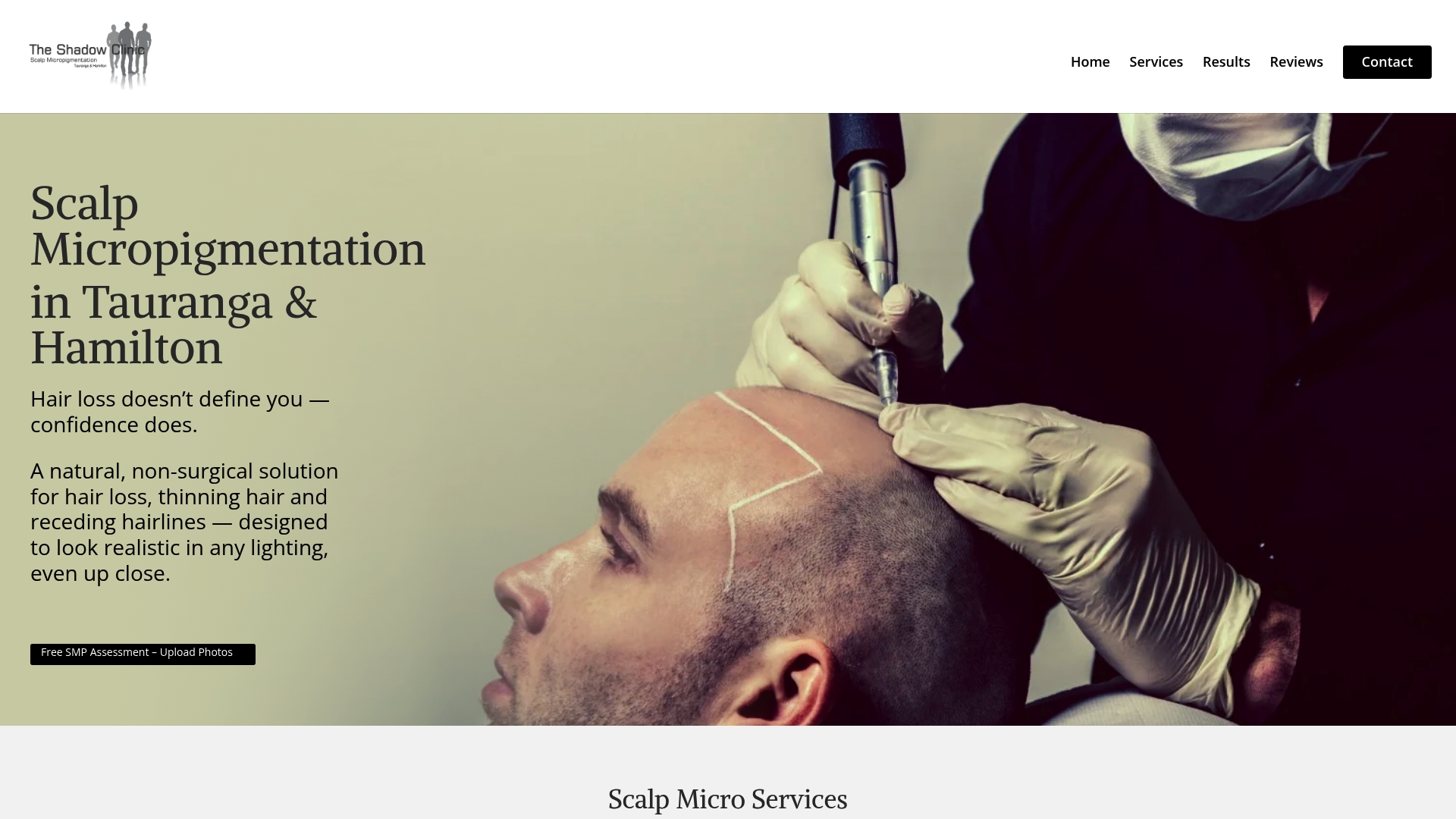
The clinic’s approach prioritises the transition zone and micro-irregularity design that separates a convincing result from a detectable one. No downtime, no scarring, and results that hold up under close inspection. Book a consultation at The Shadow Clinic Tauranga to discuss your hairline design and see portfolio examples before committing to any treatment.
FAQ
What is the micro hairline technique in simple terms?
The micro hairline technique is an artistic method used in SMP and hair transplantation that creates a natural-looking hairline by placing pigment dots or hair grafts with deliberate irregularity and gradual density variation across a 1 to 2 cm transition zone.
How does the micro hairline technique differ from standard SMP?
Standard SMP focuses on overall scalp coverage and density, while the micro hairline technique specifically governs how the front edge of the hairline is designed, using sparse single-dot deposits, soft edges, and intentional asymmetry to avoid an artificial appearance.
Is the micro hairline technique effective for alopecia?
The technique is effective for alopecia when the practitioner designs the hairline to suit the client’s remaining hair pattern, skin tone, and facial structure. Results depend heavily on the practitioner’s skill in managing the transition zone and pigment placement angles.
How much does a micro hairline SMP treatment cost?
The cost of micro hairline SMP treatment varies by clinic, geographic location, and the extent of hair loss being addressed. In New Zealand, SMP treatments typically range from several hundred to several thousand dollars depending on session requirements and clinic expertise.
What makes a micro hairline result look undetectable?
The combination of micro-irregularities at the hairline edge, a gradual density fade across the transition zone, correct pigment or graft angle, and age-appropriate positioning are what make a micro hairline result genuinely undetectable to observers.